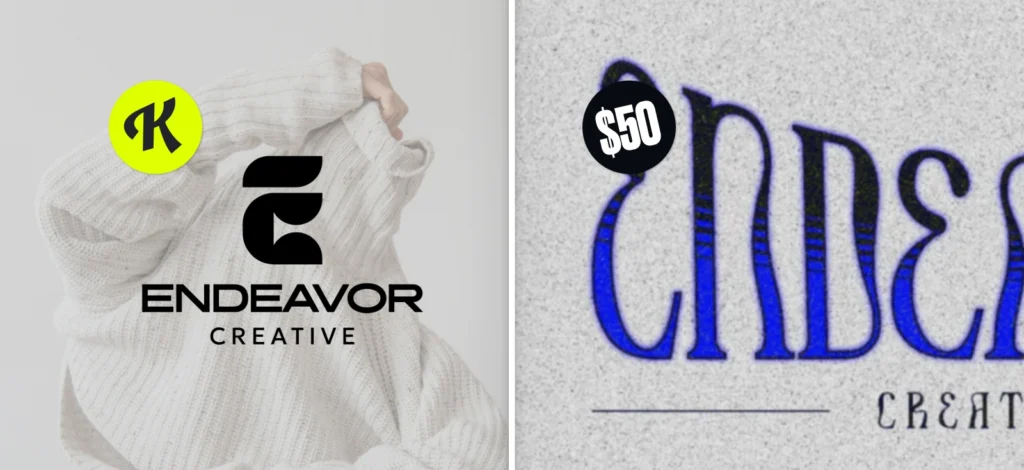
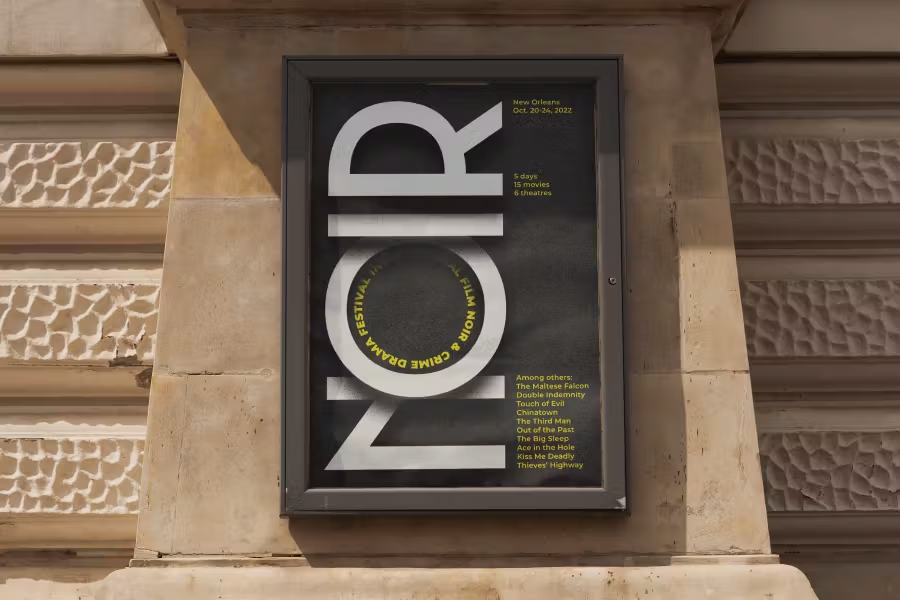
Balance is one of the fundamental principles in art and design but what is balance in art, and why does it matter?
In art and design, balance refers to the way visual elements are distributed across a composition to create a sense of stability and harmony. It’s the silent force that helps everything feel cohesive, allowing your eye to move comfortably across a piece without getting stuck or overwhelmed.
This principle of balance enhances clarity, directs attention where it’s needed most, and creates an overall experience that’s easy to engage with. Without balance, even the most exciting ideas can end up feeling chaotic or hard to digest.
In this article, well explore what balance means in art (the definition and significance of this principle of art), why balance matters in graphic design, and break down the types of balance (from symmetrical to asymmetrical, radial to crystallographic).
What is balance in graphic design?
To define balance in art, balance refers to the distribution of visual elements across a composition so that it feels stable and pleasing. In other words, balance is how artists organize the visual weight of shapes, colors, lines, and textures in an artwork.
Just as a physical object can tip if its weight is uneven, a painting or design can feel “heavier” on one side if the elements aren’t balanced.
A balanced composition has a sense of equilibrium; no area of the artwork draws the eye so much that it eclipses the rest. This doesn’t mean both sides have to be identical – rather, it means the overall effect is harmonious and coherent to the viewer.
The meaning of balance in graphic design is often described through analogy: think of a seesaw or scale. If one side has too much weight, it tips. Likewise, if one part of a drawing or design has many large or dark elements and the other part has only a tiny light element, the composition will feel off-kilter.
Balance corrects this by evening out how elements attract attention. In fact, balance is sometimes defined as the perceived visual stability of an artwork. When a piece is balanced, viewers subconsciously feel that it looks right. When its unbalanced, the viewer may sense tension or that something is wrong.
Why are these symmetrical and asymmetrical principles of balance so important?
Let’s talk about why balance in graphic design is so crucial (and in art in general).
We’ve hinted at a few reasons: Balance in graphic design creates harmony, makes designs more comfortable to view, and effectively communicates messages. Let’s dig a bit deeper into the benefits and “research-backed” explanations of balanced design.
1. Balanced designs are easier to look at and navigate
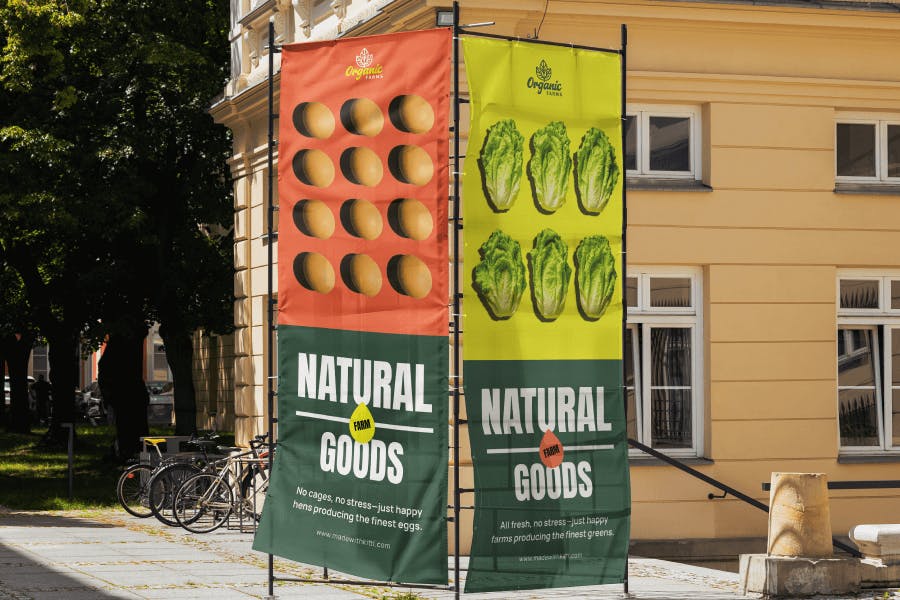
Humans have an innate desire for order in visual stimuli – when things are balanced, our brains relax a bit. Imagine walking into a room where all the furniture is pushed to one corner; you’d instinctively feel something is off.
The same happens with an off-balance poster or webpage. An unbalanced composition can feel uncomfortable or tense for the viewer. In contrast, a balanced design creates a sense of ease. Its like the design is holding itself up confidently, and the viewer isn’t worried it will tip.
This comfort means users are more likely to stay with the design (whether that means reading a brochure longer or browsing a website more). In practical terms, visual balance improves user experience.
2. Balance in graphic design guides the viewer’s eye to all parts of the design
A well-balanced layout distributes interest. If one area had all the interesting stuff and another area was blank, you’d only look at the interesting part and ignore the rest.
But designers usually want you to take in the whole composition. Balance in graphic design ensures that all areas have some visual interest, encouraging the viewer to scan around and absorb the full message.
For example, if you’re designing an infographic, you don’t want one data point to overshadow all others unless it’s the key takeaway. By balancing text, graphics, and whitespace, you make sure each section of information gets noticed.
Research in advertising has shown that viewers can overlook information placed in “dead zones” of a layout – balance in graphic design helps eliminate those dead zones by evening out the visual attraction across the page.
3. Balance supports clear communication and hierarchy
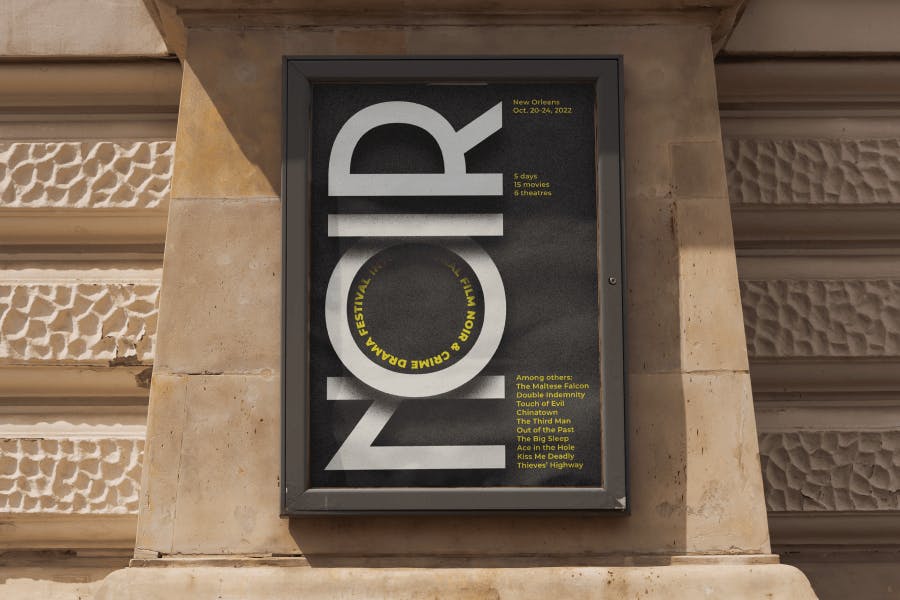
Ironically, balance in graphic design can help reinforce an intentional imbalance in hierarchy. That sounds contradictory, but consider: to communicate a message, you often want a focal point (like a headline or product image) and supporting information.
If your focal point is too dominant (visually heavy) without anything balancing it, the design might actually become less effective, it can look isolated or too blunt. A balanced composition doesn’t mean everything is equal in importance; rather, it means the primary element is supported by secondary elements in a pleasing way.
Good balance will let the most important thing stand out just enough while the secondary information still holds its own weight in the layout.
This engagement is crucial for communication: the longer and more comfortably someone looks at your design, the more of your message they absorb.
4. Balance in graphic design evokes the desired emotional response
We touched on this: Balance in graphic design tends to evoke feelings of stability, professionalism, and trust. If you want someone to feel at ease (say, for a banking website or a hospital brochure), a balanced design with symmetry or gentle asymmetry and lots of breathing room can subconsciously convey that sense of stability.
According to design theory, balanced compositions can provide a sense of authority and confidence due to their visual stability. On the flip side, if you intentionally want to disorient or challenge the viewer (perhaps in an avant-garde art poster or a horror movie advertisement), you might break balance on purpose.
The key is that as a designer, you control the balance in graphic design to fit the goal. Most of the time in graphic design for businesses, products, or user interfaces, we aim for at least a degree of balance to not alienate the audience.
What are the 4 types of balance in graphic design and art ?
There is no single way to achieve balance in graphic design. In fact, art theory identifies several types of balance in art, each with a different look and feel.
The four major types of balance in graphic design are symmetrical balance, asymmetrical balance, radial balance, and crystallographic (mosaic) balance.
All of these balance types aim for equilibrium in the composition, but they do it in distinct ways. Let’s define each type of balance in art and look at how they differ, with examples.
01. Symmetrical balance (formal balance)
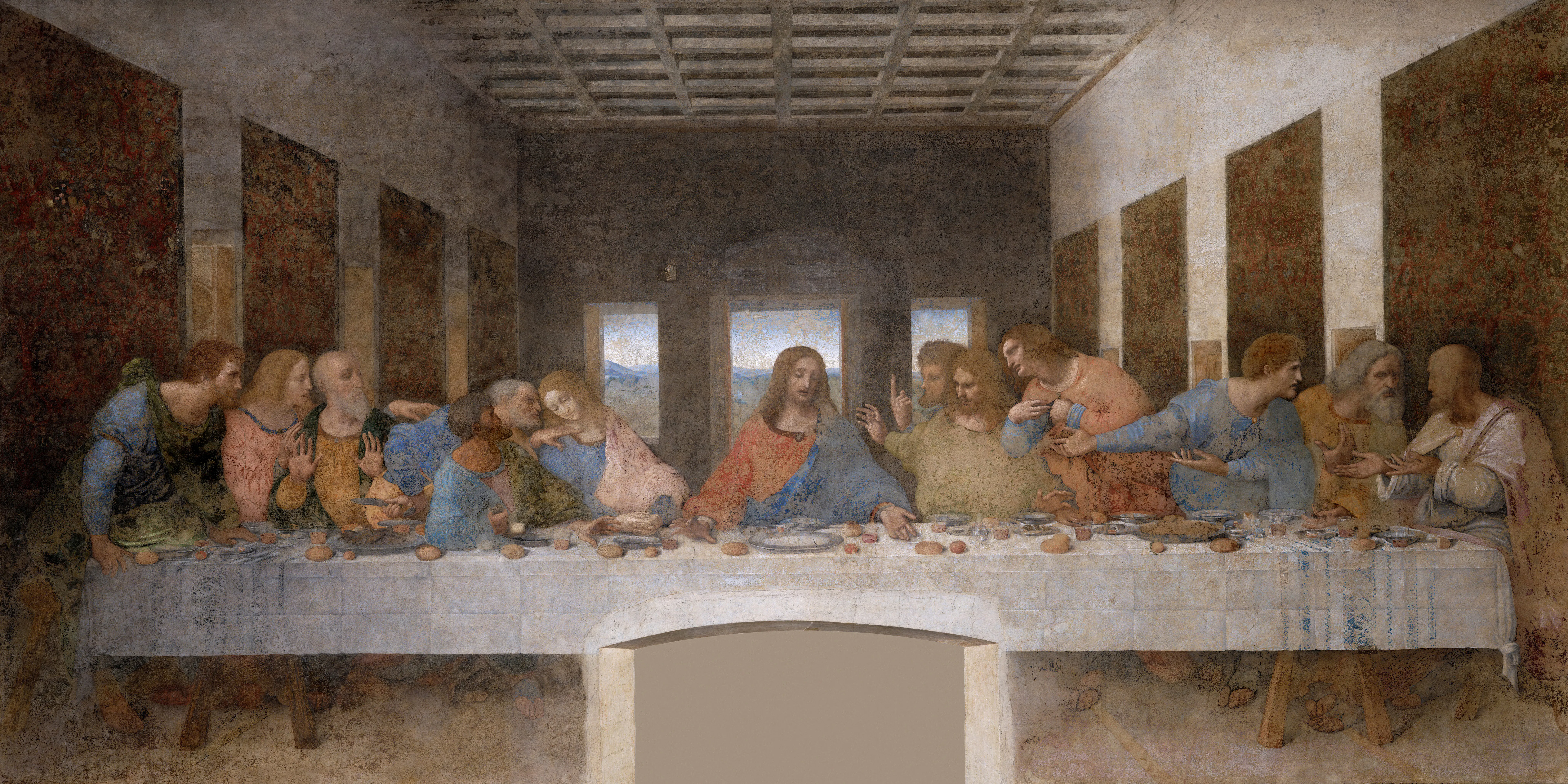
When most people think of balanced art, they initially think of symmetry. Symmetrical balance in graphic design is when elements are arranged in a mirror-image fashion.
If you draw an imaginary line through the center of a symmetrically balanced composition, one side would reflect the other side almost like a folded paper, either left-to-right or top-to-bottom.
In formal terms, each half of the artwork has the same visual weight and almost identical elements in opposite positions. This is also called formal balance or bilateral symmetry.
A symmetrically balanced composition tends to feel orderly, stable, and calm. Since both sides are the same, there are no surprises nothing feels lopsided. This type of balance is often used when an artist or designer wants to convey formality, structure, and harmony.
Symmetrical balance in graphic design examples can be seen in many classical paintings, religious art, and institutional designs that use symmetry to evoke a sense of permanence and authority.
The downside, however, is that perfect symmetry can sometimes feel static or boring because one half simply repeats the other, the viewer can predict what theyll see.
Approximate symmetry is a variant where the two sides arent 100% identical, but are very similar in the distribution of shapes. This near-symmetry still feels balanced, but introduces slight variety so its less rigid. Many Renaissance paintings actually use approximate symmetry: the halves echo each other but arent clones.
One famous example of balance in art through symmetry is our visual above: Leonardo da Vincis The Last Supper. This mural painting is often cited for its balanced, stable composition. Leonardo places the central figure of Jesus in the middle, and the twelve apostles are arranged in six on each side, creating an approximate mirror image in terms of grouping.
02. Asymmetrical balance (informal balance)
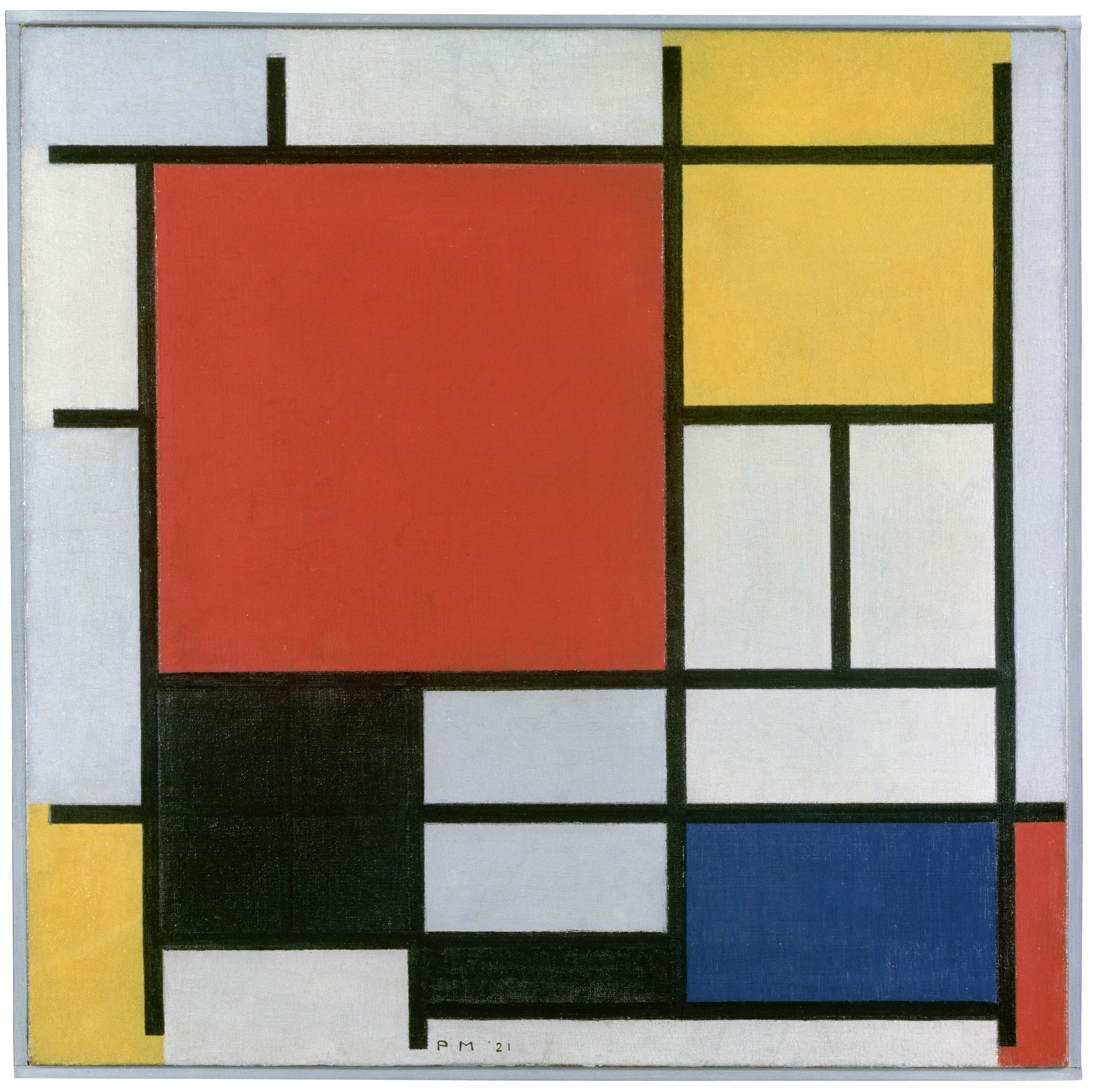
Asymmetrical balance in graphic design means the two sides of the composition are not mirror images; they have different elements, yet those elements are arranged so that their visual weights still balance out.
This is sometimes called informal balance because its a bit looser and more creative; it doesn’t follow a strict copy-paste mirroring formula. But this balance is sometimes considered more challenging because there’s no simple rule you must judge and adjust the composition by eye.
Think of asymmetrical balance like a seesaw with unequal weights: a heavy object on one end can be balanced by a combination of several lighter objects on the other end, or by moving the fulcrum.
In design terms, one large or dark shape on the left might be balanced by several smaller or lighter shapes on the right. The two sides don’t look the same, but they feel balanced. Asymmetrical compositions often use differences in color, shape, size, or spacing to achieve equilibrium instead of duplication.
However, asymmetrical balance in graphic design can be harder to get right because you have to carefully consider the visual weight of each element and its position, rather than relying on a straightforward mirror. It’s a bit of an art (and science!) to make different items feel harmonious.
To illustrate asymmetrical balance with an example, consider the abstract paintings of Piet Mondrian. Mondrians Composition with Red, Yellow, Blue, and Black (1921) like what we have above, is a non-symmetrical arrangement of rectangles, yet it feels balanced: the large red square on the left is offset by smaller blue and yellow rectangles on the right, plus black lines that partition space strategically.
This example of Balance in graphic design shows how asymmetry can achieve equilibrium through contrast, not symmetry.
To check asymmetrical balance in graphic design, squint or step back and see if one area feels too dominant. Or temporarily convert the design to grayscale; this way, you can evaluate the tonal weight without color influencing you. (If one side of a grayscale image is much darker, it’s likely heavier visually.)
03. Radial balance
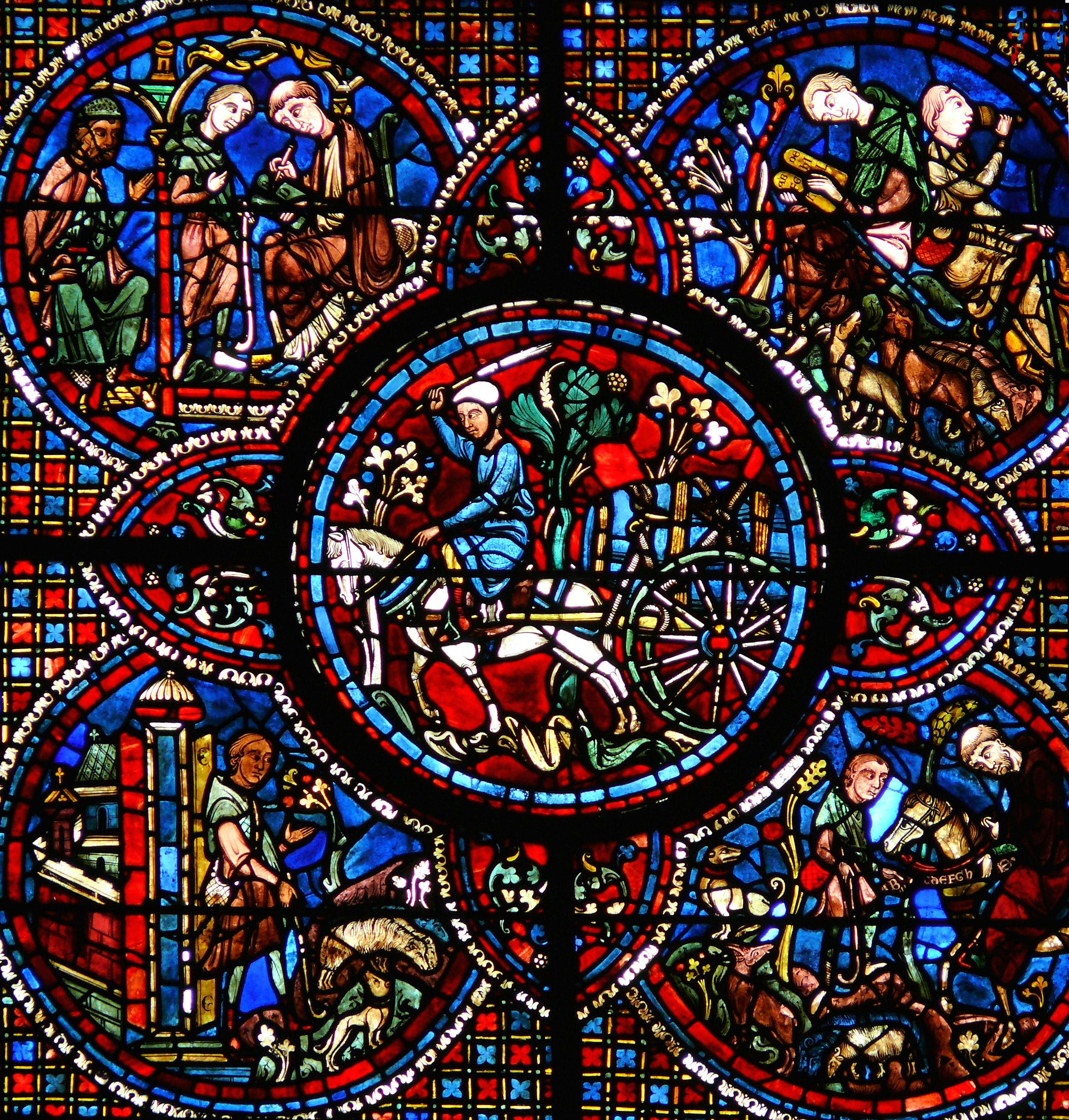
Imagine a kaleidoscope or a flower with petals radiating from the center, that’s the idea of radial balance in graphic design. In a radially balanced design, elements are arranged around a central point, like the spokes of a wheel or the slices of a pie.
Radial balance in graphic design means the composition has a strong center that everything pivots around. If you were to rotate a radially balanced design, it would look the same at multiple angles (much like how a mandala or a starfish has repeated segments around the center).
In art, radial balance isn’t as common as symmetry or asymmetry, but it’s very striking when used. It’s frequently seen in religious art, mandalas, rose windows, and logos or designs that need a focal point in the middle.
The defining feature is that all the visual elements radiate outward (or inward) to/from the center, so the center is inherently the focal point. A classic example would be the ornate rose windows of Gothic cathedrals, which have intricate patterns of glass arranged in a circle – no one side dominates because every part is part of the same outward flow.
Radial balance in graphic design tends to create a sense of wholeness and unity. Because everything is integrated around the center, the viewer’s eye is naturally led into the middle. It can convey harmony (often used in spiritual or meditative art) or draw attention strongly to a product or logo placed at the center in graphic design.
One advantage of radial compositions is that maintaining balance is straightforward – if you ensure the pattern of shapes or colors is evenly distributed in a circle, it will inherently feel balanced because of the symmetry around the circle (in fact, radial balance is sometimes considered a subset of symmetrical balance, just not along a single axis but infinite axes around the circle).
The stained glass rose window of Chartres Cathedral is a stunning example of radial balance in graphic design and architecture. In this design, figures and shapes are arranged in concentric circles around a central point.
Each “slice” of the circular window has similar visual weight and content, creating harmony as you go around the circle. The repetition of shapes and vibrant colors radiating outward leads the eye systematically to the outer edges and back to the center.
04. Crystallographic (mosaic) balance
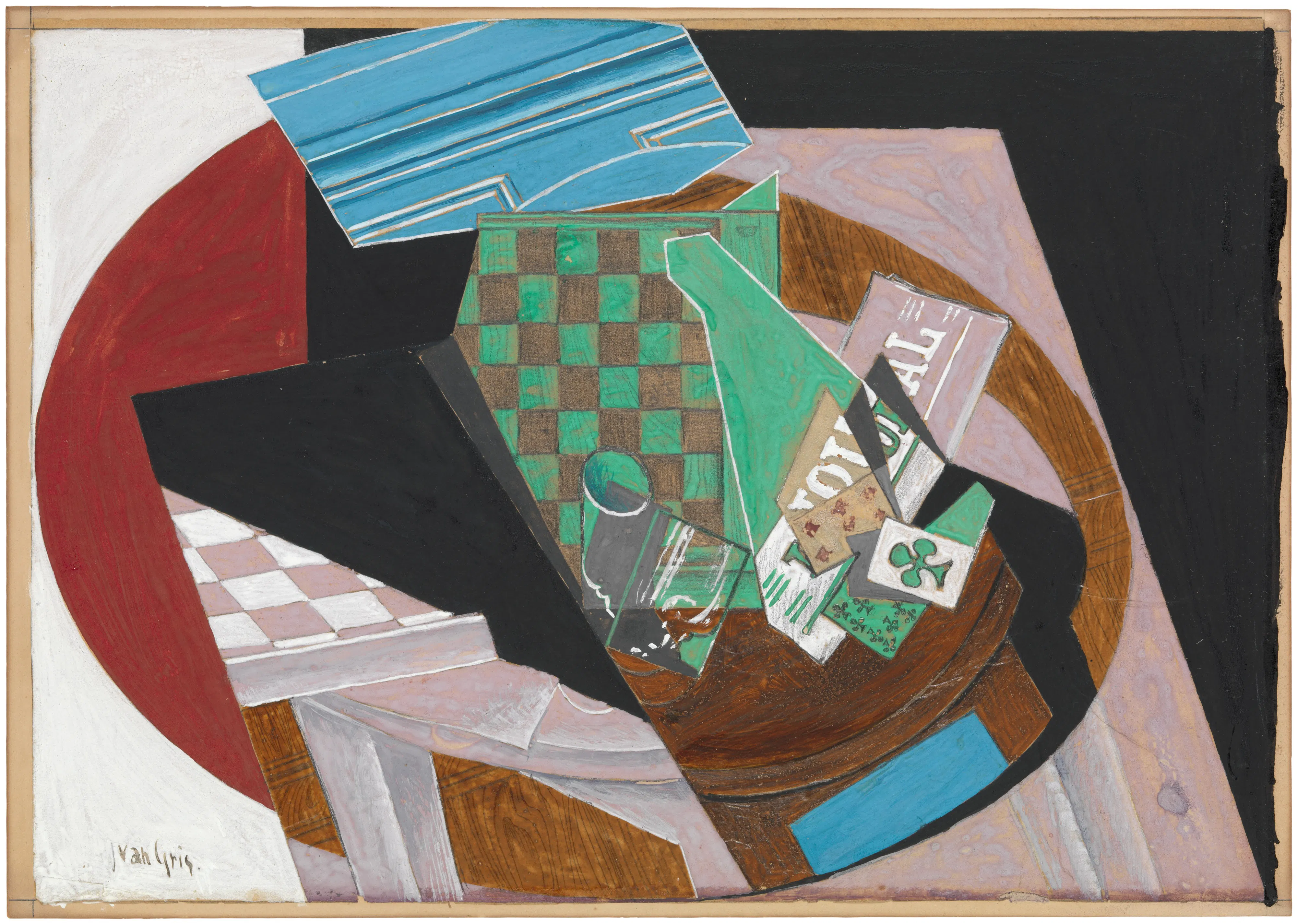
The term sounds complex, but you’ve definitely seen this type of balance in graphic design: picture a page full of a repeating pattern, like a wallpaper covered in floral prints or a mosaic of many tiny images.
Crystallographic balance, also known as mosaic balance in graphic design or allover balance — occurs when you have an evenly distributed pattern with no single focal point. Essentially, every part of the composition has equal visual importance.
It’s the opposite of having one big element stand out; instead, many small or similar elements are spread across the design so uniformly that the eye wanders without landing on one particular spot.
In crystallography, balance in graphic design is achieved through consistency and repetition. The composition might even look busy or chaotic at first glance because there’s so much going on, but the key is that this visual activity is evenly spread out.
Crystallographic balance often gives a sense of rhythm and texture. It can be very dynamic and energetic, since literally the whole canvas is active. However, it risks overwhelming the viewer or feeling random if not done carefully.
Artists or designers use this type of balance when they want to avoid any hierarchy in the elements — for instance, background patterns often use allover balance, so they don’t detract from foreground content.
In modern art, the idea that “the composition has no focal point” was quite radical. In graphic design, you might see mosaic balance in things like a collage-style poster or a scrapbook page where images are sprinkled evenly, or a website background with a repetitive icon motif.
A notable example of crystallographic balance in public domain art is “Checkerboard and Playing Cards” (1915) by Juan Gris.
This Cubist still life showcases a uniform distribution of visual elements, such as playing cards, a checkerboard pattern, and other objects — across the canvas without a central focal point.
The repetitive and evenly weighted components exemplify crystallographic balance in graphic design, where the composition achieves harmony through the consistent arrangement of similar elements.
True overall balance means consistency: the artist often uses grids or random but even distribution so that no single element stands out. It can give a sense of infinite pattern theoretically, the design could extend beyond the frame and still look the same.
This technique is great for patterns and can also evoke a feeling of liveliness and movement since the viewer’s eye keeps roaming around the composition.
In using the crystallographic balance, one common mistake to avoid is having an unintentional focal point. If one element in the mosaic is different (a different color, or much larger), it can pop out and ruin the even balance.
Summary of balance in graphic design you could try
To recap, when we talk about the types of balance in art, we are essentially describing different methods to arrange elements so that the composition feels stable:
| Type of balance | Definition | Example |
|---|---|---|
| Symmetrical balance | Both sides are the same or very similar (mirror image). Feels formal and orderly, like a perfectly balanced scale. | A face, a neoclassical building facade, a centered website layout. |
| Asymmetrical balance | Sides are different but carry equal visual weight. Feels dynamic and interesting; relies on contrast and careful placement. | A landscape with a tree on one side and a group of clouds on the other; a magazine layout with a big photo vs. text blocks. |
| Radial balance | Elements radiate outward from a center point in a circular fashion. Creates a focused and unified composition. | A mandala, a wheel, a starburst design. |
| Crystallographic (mosaic) balance | An all-over pattern with no single focal point. Feels textured, uniform, and evenly distributed across the canvas. | Patterned wallpaper, a pile of confetti spread out evenly, a tiled photo collage. |
Each type of balance can be used deliberately to support the meaning or purpose of the artwork.
Advanced designers even combine different types of balance in graphic design. For instance, you could have a roughly symmetrical layout overall, but with some asymmetry in the details, or a radial design that also has symmetrical elements within it.
Mastering balance in graphic design: A key principle for stronger designs
Balancing a composition is both an art and a science. We’ve covered the definition of balance in art, reviewed the main types of balance with examples, and examined why achieving balance is so critical in design.
In a sense, balance in graphic design is about finding harmony — making disparate parts look like they belong together. Whether you’re drawing by hand or designing a digital graphic, keep an eye on how your elements interact visually.
With practice, you’ll develop an intuitive feel for balance. Your designs will not only look more polished and aesthetically pleasing, but they’ll also communicate more effectively to your audience.
As you work on your next project, try consciously applying one of the concepts from this guide — perhaps play with asymmetrical balance or double-check your visual weights – and see how it elevates your design.
Ready to take your designs even further? Explore powerful, easy-to-use design tools by visiting Kittl’s pricing page, where you can choose from flexible plans that fit your creative needs and start creating with balance and confidence.