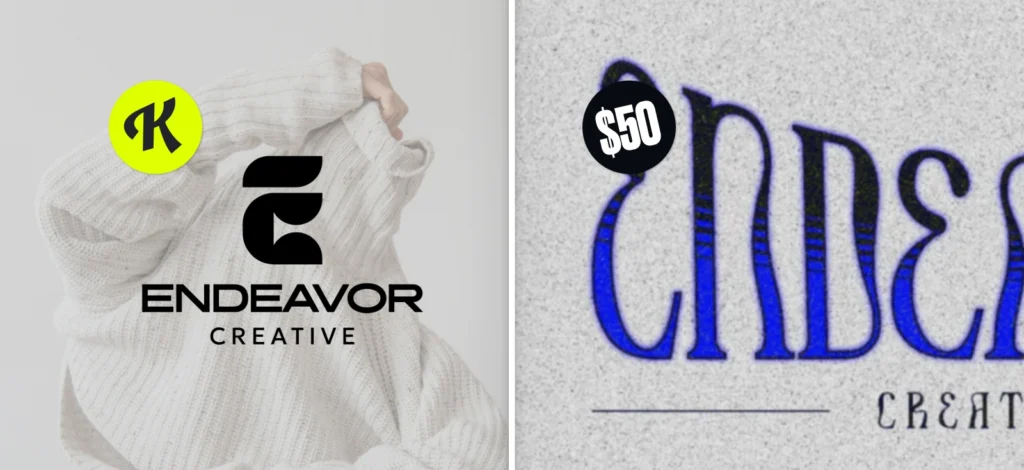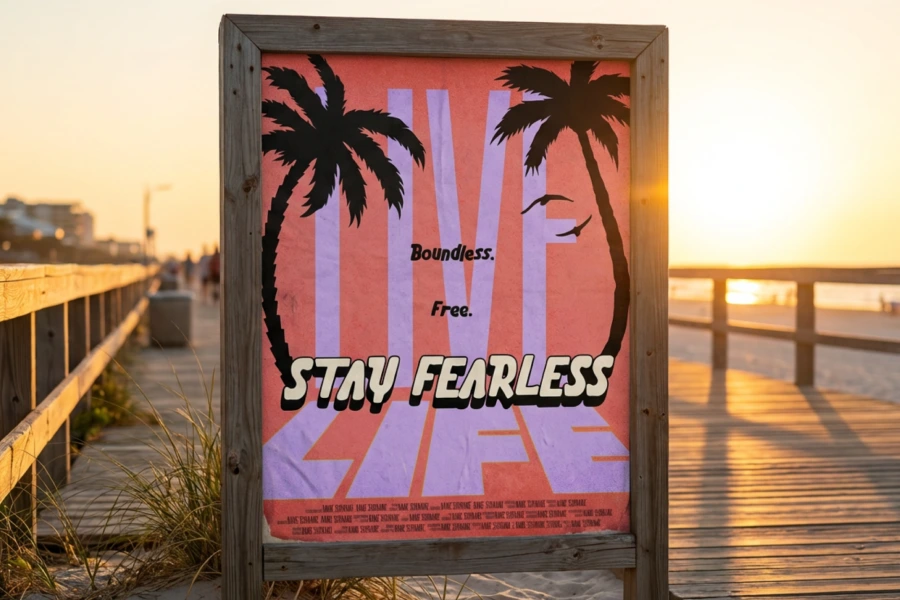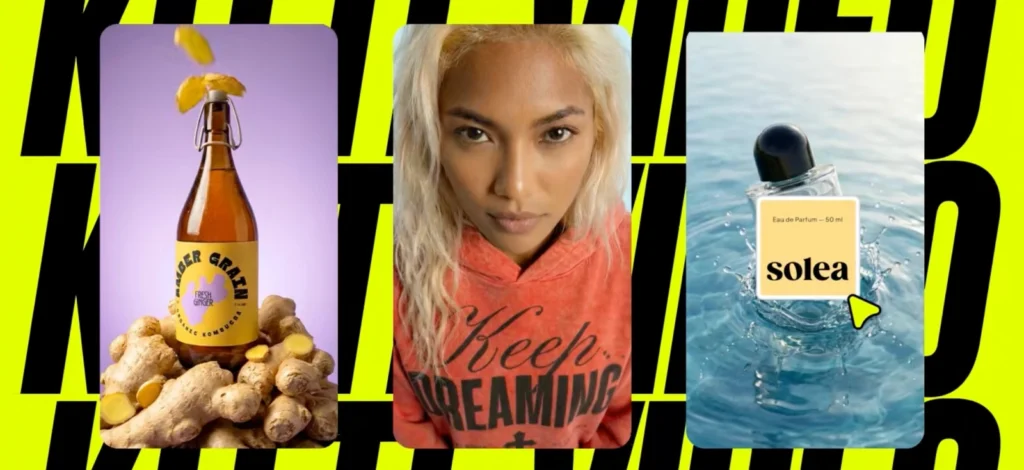

Ever tried generating a logo or poster with AI, only to end up with jumbled text that looks nothing like what you imagined?
That’s a common pain point for designers using AI tools — and it’s exactly what Ideogram AI sets out to fix. Owned by a Toronto startup founded by experts who previously worked at Google Brain, Ideogram’s mission is to fix exactly this weakness in generative art.
The company describes itself as creating “state-of-the-art AI tools to make creative expression more accessible, fun, and efficient.”
Since its founding in 2022, the startup has gained serious momentum. In February 2024, Ideogram raised an $80M Series A round led by Andreessen Horowitz (a16z) to scale its tech, especially around text rendering.
Later in this guide, you’ll learn how Ideogram pairs with Kittl AI to offer styles like anime vector, retro scripts, mascots, and more. All with better typography baked in.
Let’s dive in and see how this tool works and why designers are paying attention.
What is Ideogram AI?
Ideogram AI is a text-to-image generator built to place clean, readable words inside images.
Think logos, posters, and typographic layouts. The company’s own overview says it focuses on image generation with “unique capabilities like text rendering in images,” and its latest model emphasizes photorealism, prompt fidelity, and clear typography
For designers, the key difference is how it handles lettering. Instead of dropping in system fonts, Ideogram learns from examples of styled text and then renders new letterforms that match the look you describe.
That approach is laid out in the platform’s Text & Typography guide, which explains how the model learns style and shape so it can produce consistent, legible type in your images.
How Kittl’s Ideogram AI compares to other AI tools?

When AI design tools first appeared in Kittl, the spotlight was on versatility.
Early releases like the AI Image Generator powered by DALL·E gave designers quick ways to create illustrations and concepts.
At the same time, open-source models like SDXL (Stable Diffusion XL) became popular for their flexibility and photorealistic results.
These tools were groundbreaking, but they shared one big limitation: text inside images often came out distorted, blurry, or completely unreadable.
That’s where Ideogram AI sets itself apart:
- DALL·E: Famous for creative, surreal, and high-quality illustrations, but even in its third version, OpenAI acknowledges text handling remains a challenge. Ideogram’s specialty is making lettering crisp and usable straight out of the box.
- SDXL (Stable Diffusion XL): Hugely versatile and powerful, with strong photorealism and style diversity. But as Stability AI’s documentation shows, it requires heavy tweaking or fine-tuning to get legible text. Ideogram skips that complexity, delivering poster-ready typography without plugins or extra training.
How to use Ideogram AI in Kittl Editor
Using Ideogram inside Kittl is simple once you know where to look. Here’s how you can get started:
01. Go to the Kittl AI menu selection

Open your project in the Kittl Editor and head to the AI menu. This is where all the generation tools live.
02. Select the AI under the “Create” tab

Click the Create tab, then choose the AI model you’d like to work with. If you specifically want to try Ideogram, you’ll find it listed among the vector, logotype, and typography categories.
03. Describe the kind of image you want

In the text box, type a clear description of your idea—whether it’s “a retro chrome logo for a coffee shop” or “a cartoon mascot for a T-shirt.”
If you need help shaping your description into something the AI understands, check out this AI prompt writing guide. It explains how to balance detail, style, and keywords so you get consistent, high-quality results.
04. Adjust settings before generating

Above the Generate Image button, you can select the image ratio, privacy options, and how many images you’d like to create at once.
05. Choose from styles if you’re unsure

Not sure which model specializes in what? You can also browse styles. Ideogram is usually grouped under vector images, logotypes, and typography.
From here, hit Generate, and Kittl will return multiple results for you to pick from. You can drop your favorite straight onto the canvas, edit colors, or pair it with fonts and elements.
Ideogram in Kittl AI
When you open the Kittl AI “Create” tab, you’ll notice that some styles are powered by Ideogram models. These are split between Ideogram 3 quality (newer, sharper results) and Ideogram 2.0A (diverse stylistic options).
Here’s a breakdown of what each one is best for:
| Category | Ideogram 3 quality | Ideogram 2.0A |
| Vector | Anime vector, cartoon, emblem, street art | Cartoon, line icon, vector art, coloring book, line art |
| Colored Clipart | — | Photo cutout, detailed drawing, watercolor, cartoon, mascot, T-shirt graphic, poster (artistic) |
| Logotype | — | Liquid type, calligraphic, retro script, gothic, groovy, playful, heart shape |
| Typography | Minimal logo | Vintage floral, milky, magic lettering, tropical, chrome effect |
In Kittl, is Ideogram AI free?
The short answer: yes, but only up to a point.
Inside Kittl, Ideogram AI is one of several models you can generate images with. On the free plan, you’ll get enough tokens for about 10 generations with Ideogram 2.0A, alongside other models like Flux Schnell, SDXL Flash, and DALL·E 3.
That means you can experiment with cartoon logos, line icons, or mascot graphics powered by Ideogram without paying anything.
But if you want to use Ideogram regularly, you’ll need to upgrade:
- Pro plan: includes up to 1,000 monthly AI images, which covers about 100 generations with Ideogram plus tokens leftovers to try other models (such as 1,000 with Flux Schnell and 100 with DALL·E 3). It also unlocks premium templates, HD exports, and a commercial license — ideal for freelancers or small shops.
- Expert plan: built for power users, with up to 3,000 monthly AI images, including around 300 Ideogram generations. It also adds unlimited projects, more AI tools, and print-on-demand presets. Perfect if you’re running a POD store or managing multiple client projects at scale.
| Plan | Ideogram access | Other highlights | Best for |
| Free | ~10 generations with Ideogram 2.0A | Also includes Flux Schnell, SDXL Flash, and DALL·E 3 tokens | Beginners who want to test AI image generation without cost |
| Pro | ~100 generations (part of 1,000 monthly AI images) | Premium templates, HD exports, commercial license | Freelancers or small shops creating logos, posters, and branding assets |
| Expert | ~300 generations (part of 3,000 monthly AI images) | Unlimited projects, more AI tools, print-on-demand presets | POD sellers or design teams managing multiple projects at scale |
Since Ideogram is fully integrated into the Kittl Editor, you don’t need to juggle multiple apps or downloads. You can generate, edit, and finalize your designs in one place — no exporting/importing hassle.
How to write prompts for Ideogram AI

A straight answer to “How to write prompts for Ideogram AI?” is: keep it clear, structured, and natural.
Ideogram responds best when prompts read like short design briefs rather than keyword dumps.
The model prioritizes what comes first, so put your main subject at the start, use natural phrasing, and be precise about style or effects.
Concise prompts under ~150 words also work better, since long, overloaded descriptions can dilute the result.
Prompt formula: Subject + style + detail
- Subject: What you want (logo, mascot, emblem)
- Style: The visual vibe (minimal, retro, anime)
- Detail: Extra info — colors, effects, context
Example & “why it works”

Why this kind of prompt is ideal for Ideogram:
- Text specificity: Naming the word “SolarWave” makes the lettering legible, because Ideogram is tuned for text.
- Main subject first: Starting with “retro chrome logo” tells the AI what type of image to focus on.
- Natural phrasing: Writing in full phrases (“neon gradient lettering”) instead of stacked tags improves fidelity.
- Concise detail: “1980s cyberpunk style on dark background” sets mood and color without overloading the prompt.
Avoiding bad prompts in Ideogram
We’ve talked about how to structure a good prompt — but knowing what not to do is just as important. Many failed generations in Ideogram come from a few common mistakes:
- Overloading with keywords: Stacking too many style words (“cartoon retro chrome fantasy magical neon logo…”) makes the model split focus, often resulting in messy or unusable output.
- Being too vague: Prompts like “cool logo” or “nice poster” give the AI nothing concrete to work with, so you’ll usually get generic or distorted results.
- Contradictory instructions: Mixing directions like “minimalist detailed ornate simple” confuses the model. Stick to one clear style direction at a time.
- Forgetting the text: Since Ideogram is tuned for lettering, not specifying the exact word(s) you want inside the design often leads to jumbled or random characters.
If you want more guidance on writing prompts that actually work, check out this prompt writing tips guide. It breaks down how to phrase ideas clearly and consistently so your results look polished instead of chaotic.
Key takeaway: Can Kittl’s Ideogram replace hours of design work?
After testing it, the answer is: yes, in many cases it really can.
- Instead of struggling with warped text from other AI tools, Ideogram produces clean, usable lettering inside logos, posters, and wordmarks.
- Styles like liquid type, retro script, or anime vector give you professional-grade visuals in minutes, ready for merch or branding.
- And because Ideogram is fully integrated into Kittl Editor, you can go from idea → generation → mockup → export without hopping between different apps.
Does it replace all design work? No. Polishing, layout, and brand consistency still need your creative touch.
But if your goal is to cut hours of sketching or drafting, Ideogram in Kittl saves massive time while keeping results sharp.
So if you’re ready to test it yourself and see how much faster you can create…